
Data Center
Access our research through the lens of our charts and tables. View all of our charts (sorted by publishing date) on the left, and click on any chart to read the report in which it appeared.
Select the image you are interested in to load the corresponding report in the content section. This intuitive layout ensures that you can easily find and view reports based on their visual thumbnails.
-

Credit Stress Continues to Build, but Several Catalysts Could Help Resolve the Growth Scare & Give Crypto a Boost, Plus a Big Week for Privacy-Adjacent Projects
Fri, October 23, 2026 | 8:59PM ET -
Credit Stress Continues to Build, but Several Catalysts Could Help Resolve the Growth Scare & Give Crypto a Boost, Plus a Big Week for Privacy-Adjacent Projects
Fri, October 23, 2026 | 8:59PM ET -
Credit Stress Continues to Build, but Several Catalysts Could Help Resolve the Growth Scare & Give Crypto a Boost, Plus a Big Week for Privacy-Adjacent Projects
Fri, October 23, 2026 | 8:59PM ET -
Credit Stress Continues to Build, but Several Catalysts Could Help Resolve the Growth Scare & Give Crypto a Boost, Plus a Big Week for Privacy-Adjacent Projects
Fri, October 23, 2026 | 8:59PM ET -
Credit Stress Continues to Build, but Several Catalysts Could Help Resolve the Growth Scare & Give Crypto a Boost, Plus a Big Week for Privacy-Adjacent Projects
Fri, October 23, 2026 | 8:59PM ET -
Credit Stress Continues to Build, but Several Catalysts Could Help Resolve the Growth Scare & Give Crypto a Boost, Plus a Big Week for Privacy-Adjacent Projects
Fri, October 23, 2026 | 8:59PM ET -
Credit Stress Continues to Build, but Several Catalysts Could Help Resolve the Growth Scare & Give Crypto a Boost, Plus a Big Week for Privacy-Adjacent Projects
Fri, October 23, 2026 | 8:59PM ET -
Credit Stress Continues to Build, but Several Catalysts Could Help Resolve the Growth Scare & Give Crypto a Boost, Plus a Big Week for Privacy-Adjacent Projects
Fri, October 23, 2026 | 8:59PM ET -
SPX's break of mid-October lows likely represents the final stage of this two-month consolidation
Fri, October 23, 2026 | 8:08PM ET -
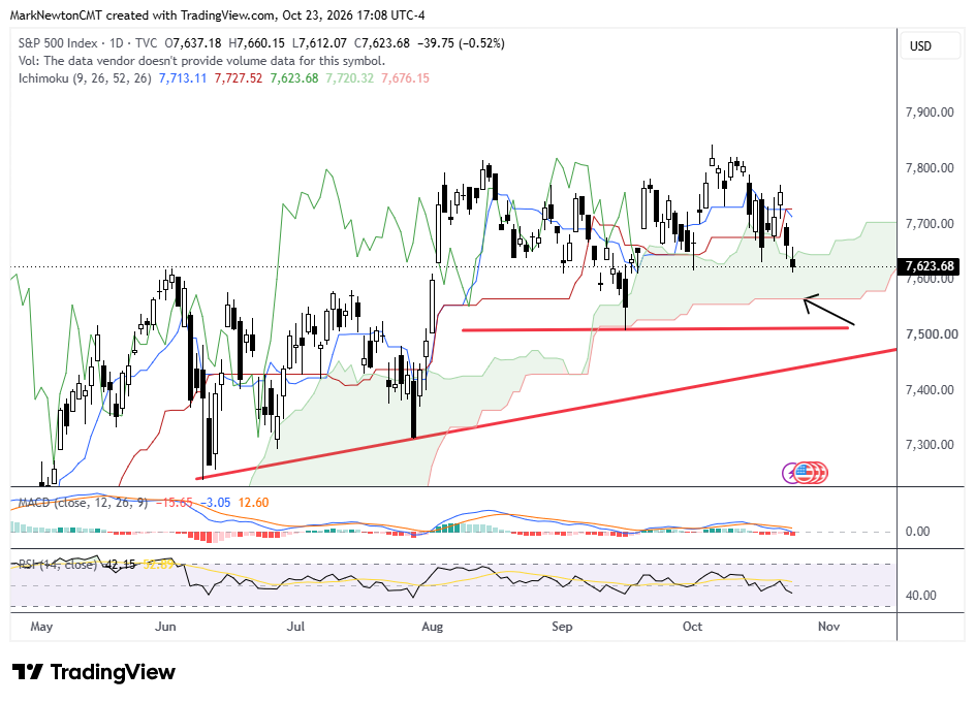
SPX's break of mid-October lows likely represents the final stage of this two-month consolidation
Fri, October 23, 2026 | 8:08PM ET -
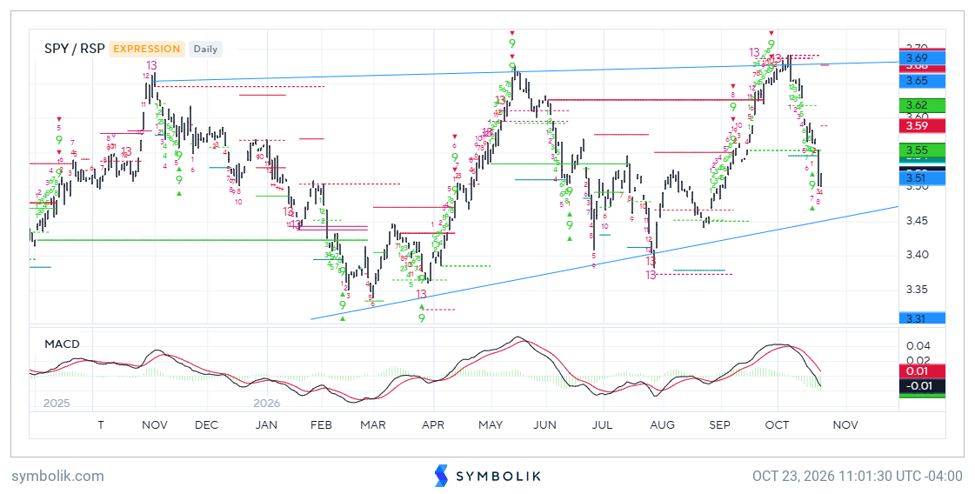
SPX's break of mid-October lows likely represents the final stage of this two-month consolidation
Fri, October 23, 2026 | 8:08PM ET -
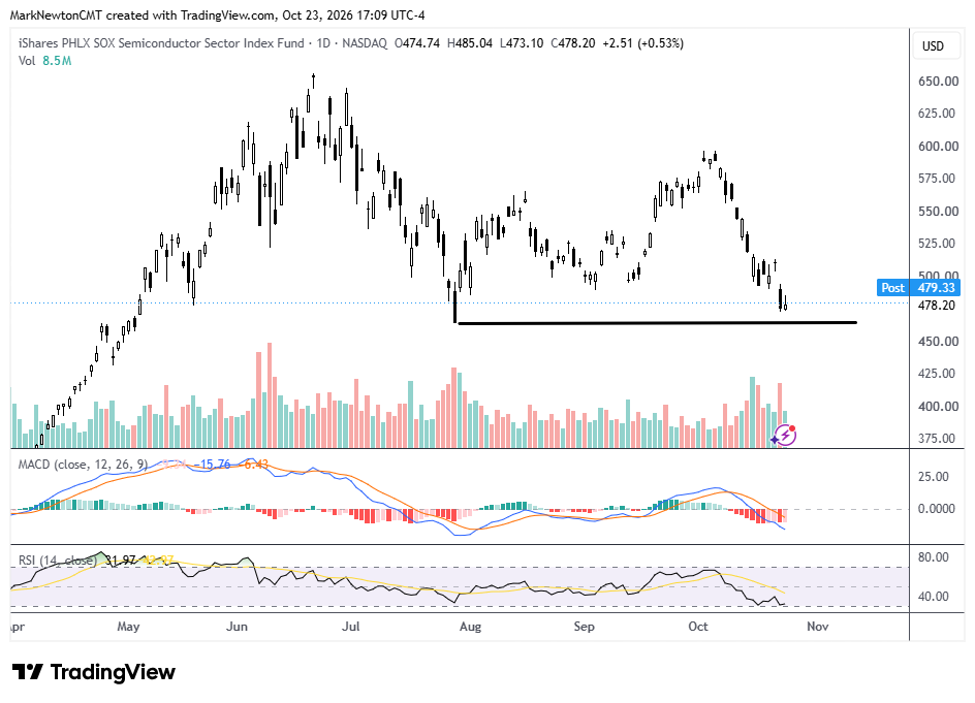
SPX's break of mid-October lows likely represents the final stage of this two-month consolidation
Fri, October 23, 2026 | 8:08PM ET -
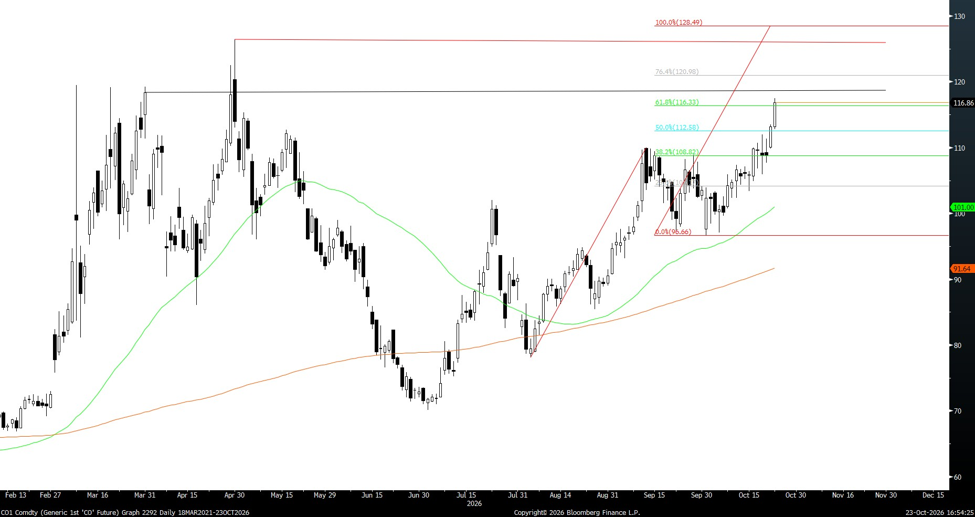
SPX's break of mid-October lows likely represents the final stage of this two-month consolidation
Fri, October 23, 2026 | 8:08PM ET -
Tech Earnings Disappoint, Sending Major Indexes Lower
Fri, October 23, 2026 | 4:42PM ET


Credit Stress Continues to Build, but Several Catalysts Could Help Resolve the Growth Scare & Give Crypto a Boost, Plus a Big Week for Privacy-Adjacent Projects
Programming Note: I will be out of the office next week. If there are any market emergencies I will do my best to provide some thoughts, but regular commentary will be limited. Appreciate your understanding.
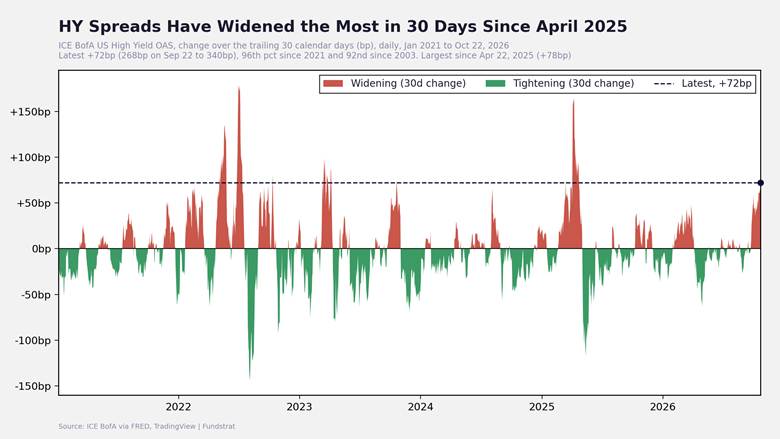
- My optimism following the SpaceX print earlier this week looks like it was a bit premature. The earnings did validate an important part of the AI infrastructure thesis, namely that demand for compute remains strong, pricing power is intact, and servicing that demand can be highly profitable. But the broader AI complex has since reversed its post-earnings move, while CoreWeave debt started to weaken again and both HY and IG spreads have moved wider. The largest 30-day widening in HY spreads since April 2025 is not something I would ignore, particularly given crypto’s historical sensitivity to deterioration in credit conditions.
- BTC has held up surprisingly well against that backdrop, but there is certainly a timer on that resilience. Given the magnitude of the recent move in credit spreads, I would have expected more damage in BTC than we have seen so far. That is encouraging. At the same time, risk markets cannot absorb widening spreads indefinitely without some consequence. If credit continues to deteriorate, I think the odds rise that BTC eventually starts to catch down to the stress we are seeing elsewhere. That said, I am optimistic these pressures recede prior to a major breakdown.
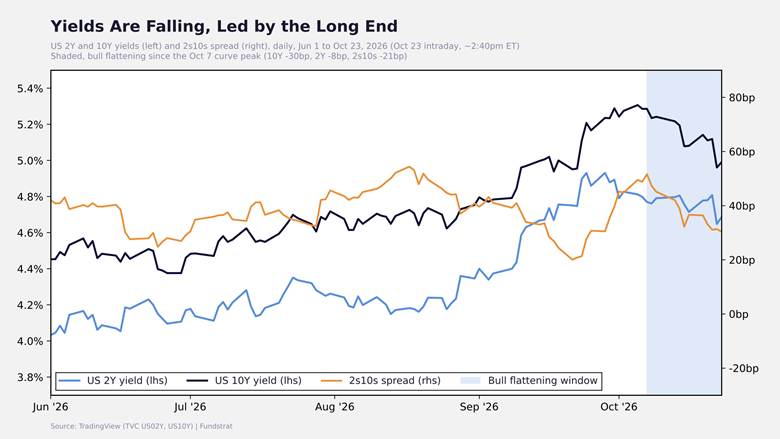
- The curve has continued to flatten since early October as both the front and long end have moved lower. Inflation expectations have softened and the odds of a hike next week have fallen materially, which should help financing costs at the margin. But the composition of the move matters. Right now, the bond market appears to be pricing some deterioration in forward growth, particularly around the AI complex. Lower yields driven by a growth scare are very different from lower yields accompanied by tightening credit and improving risk appetite.
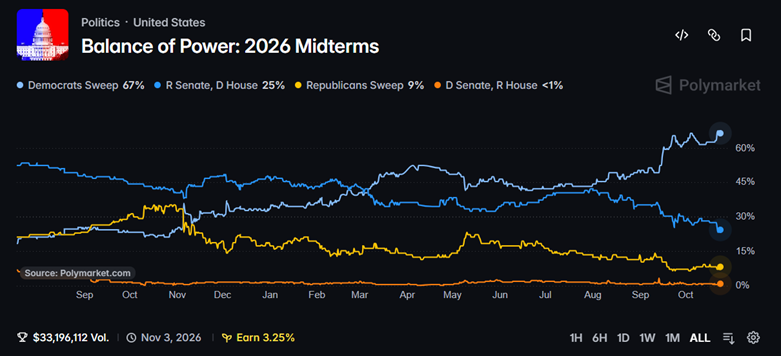
- The good news is that there are several identifiable catalysts over the next couple of weeks that could help resolve some of this stress. The first is the election. Policy risk around data-center construction has been one headwind for the AI complex, particularly as calls for moratoriums and restrictions have become more prominent. A Democratic sweep is already heavily favored in prediction markets. If that outcome occurs and the market does not react negatively, we could see some version of a “bottoming on bad news” dynamic as investors recognize that a meaningful amount of the policy risk had already been discounted.
Source: Polymarket
- The second and probably more important catalyst is earnings. Google, Microsoft, and Amazon report next week, and I think their results matter more for crypto in the near term than most of the crypto-native earnings on the calendar (save for MSTR, more on that below). The key questions are whether AI-related products are beginning to monetize more effectively and, perhaps more importantly, whether these companies continue to accelerate CapEx. If the hyperscalers reiterate aggressive spending plans, that would go a long way toward validating the demand outlook for downstream AI infrastructure and could help stabilize the miners and other CapEx receivers.
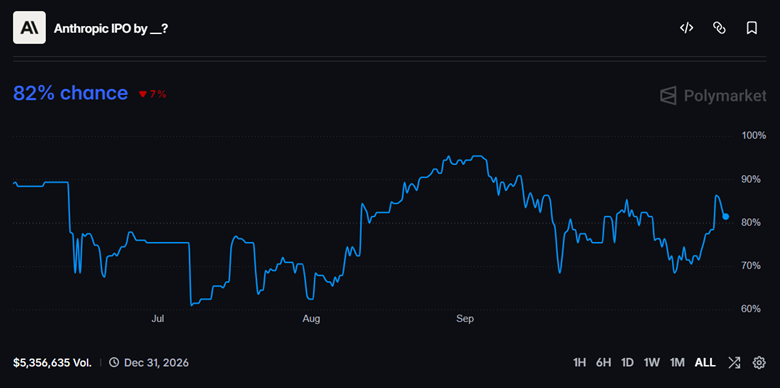
- A third potential resolution could come from Anthropic, although this is harder to underwrite. Prediction markets continue to assign high odds to an IPO before year-end. If that timeline holds, we should soon begin to get better visibility into the company’s economics and forward-looking strategy. Any evidence that frontier-model monetization is improving would be helpful, but even a credible path toward a large capital raise could reduce some of the financing concerns currently weighing on the broader AI infrastructure complex.
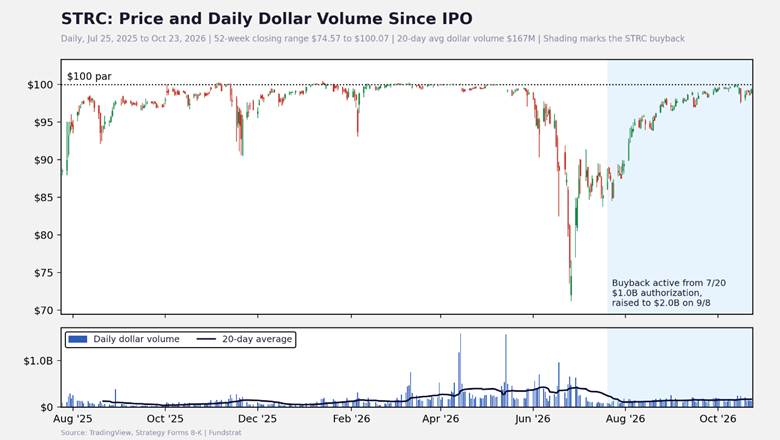
- There are also a couple of crypto-specific catalysts worth watching next week. Strategy (MSTR) shareholders vote on 10/28 on moving STRC from semi-monthly to daily dividends. I do not think the change materially alters the security, but daily distributions could broaden its appeal, modestly reduce volatility, and potentially help source some incremental demand. STRC closed at $99.36 today and remains just below par. If it can sustainably trade through $100 again, the capital-markets flywheel that helped generate price-insensitive BTC demand earlier this year becomes more relevant.
- The 11/4 Quarterly Refunding Announcement remains another important macro catalyst. The market is increasingly focused on whether Treasury takes additional steps to reduce duration supply, including potentially cutting issuance at the long end. I continue to think that more aggressive duration management would be supportive for monetary-debasement trades. If Treasury signals a greater willingness to suppress long-end financing pressure, that would fit squarely within the financial-repression framework we have discussed and should be constructive for BTC.
- One longer-term theme worth keeping on the radar is the intersection of AI, cybersecurity, and privacy. This was a key theme in broader markets this week. The pace and sophistication of AI-enabled attacks appear to be increasing, and I think that will raise the value placed on both security and privacy across digital systems. Crypto is particularly exposed because it operates in an unusually adversarial environment. There is effectively a permanent financial bounty on discovering vulnerabilities, and stolen bearer assets generally cannot be recovered in the same way they might be through a traditional financial intermediary.
- The negative read-through is obvious. AI should make it easier to discover and exploit weaknesses in poorly designed protocols, which could increase security risk across the ecosystem. But there is also a more constructive angle. Protocols that survive repeated attacks, exploit attempts, and changing threat models are being battle-tested in a way that relatively few software systems are.
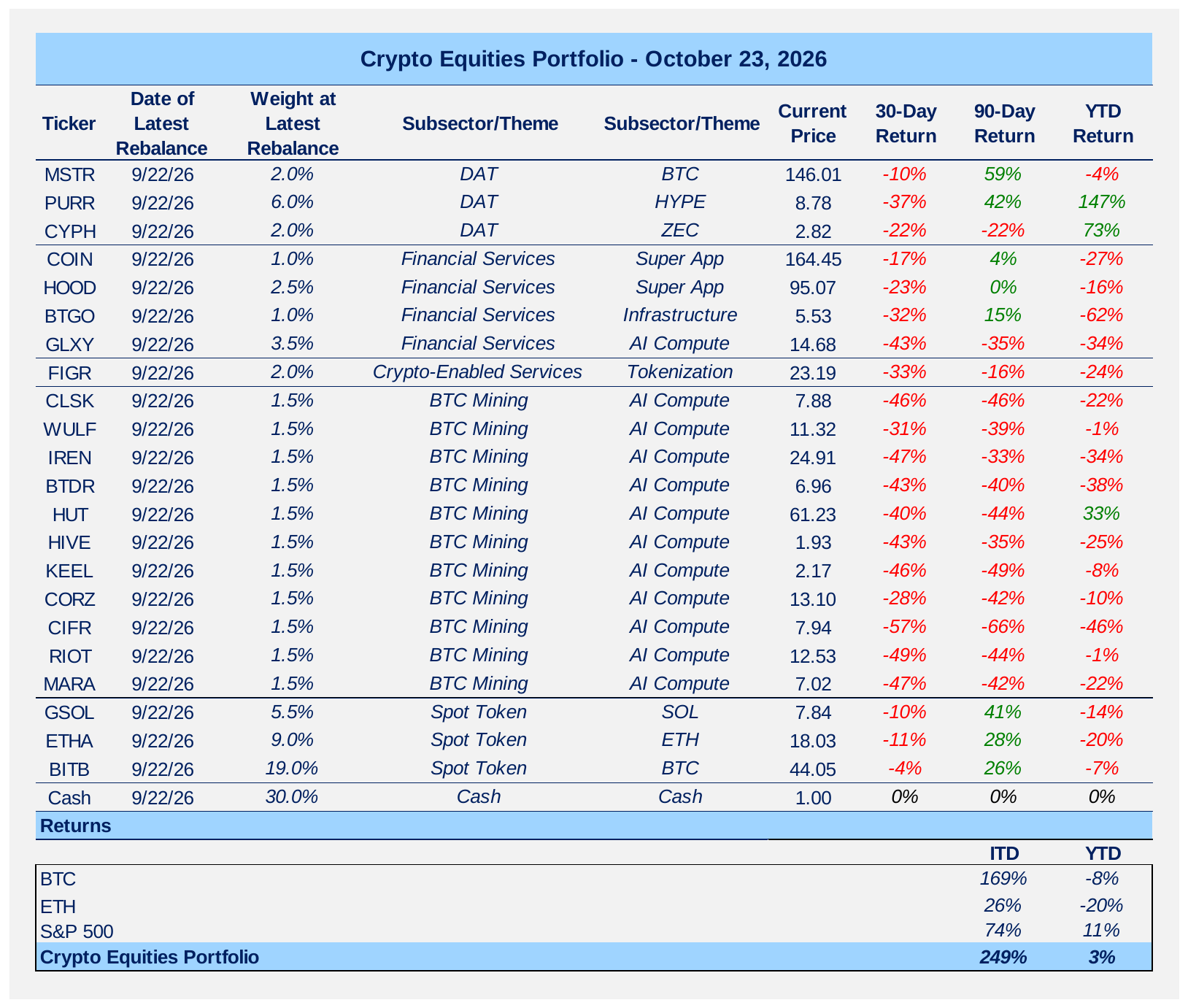
- More broadly, I think the rise in AI-enabled surveillance, data breaches, and automated attacks will make privacy itself a more valuable product over time. That is relevant not just for crypto, but for financial and data infrastructure more broadly. Within crypto, I think assets with credible exposure to privacy-preserving technologies should benefit from that secular trend. Zcash (ZEC) remains the clearest expression of that theme in our portfolios (also via Cypherpunk, the ZEC miner/DAT), which is why I continue to think it belongs either in the portfolio or high one’s watchlist despite the strong move it has already had.
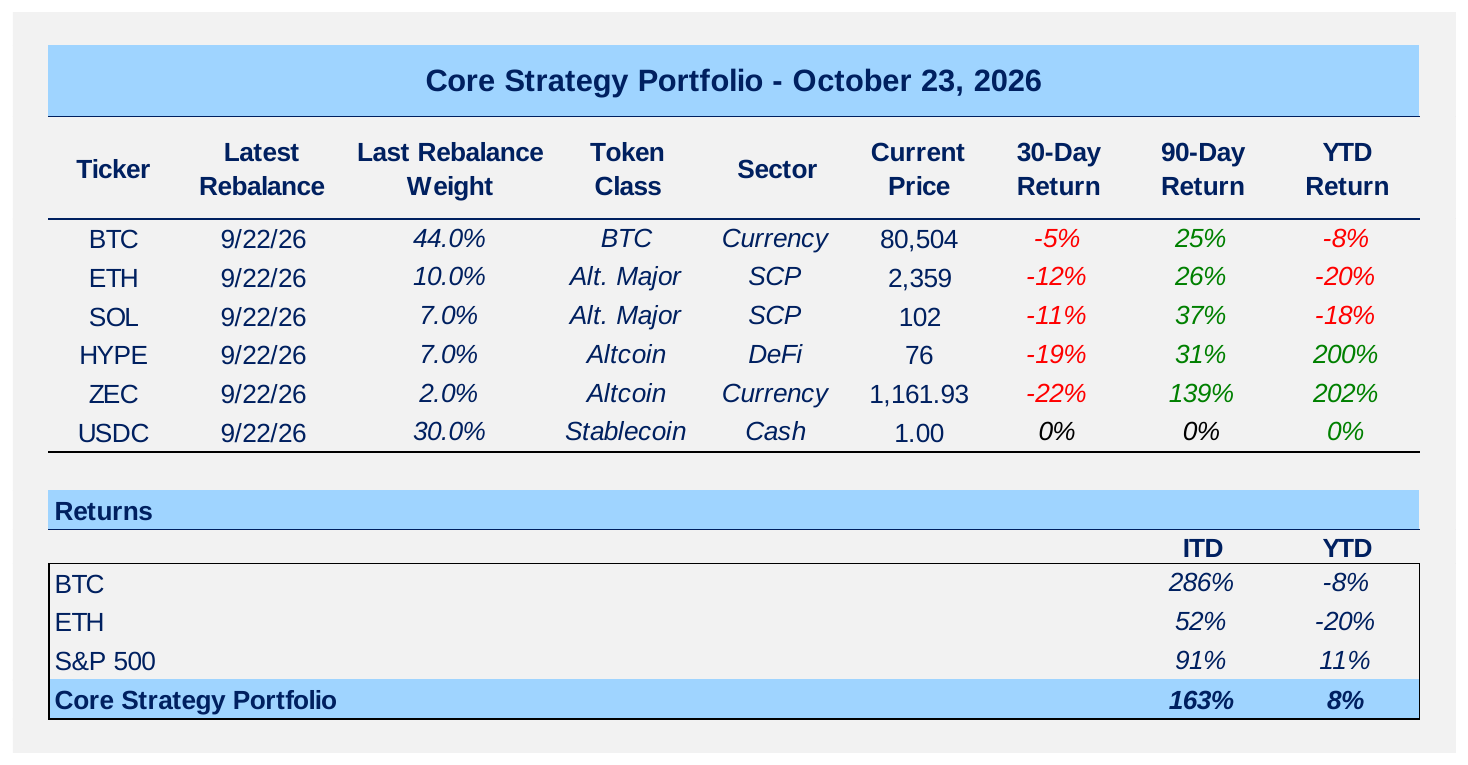
- From a tactical perspective, I am still net constructive, but I respect the current warning signals. If BTC loses the ~$80–81K area while credit continues to widen, I think the first logical area for demand is around the 50W moving average near ~$76K. Below that, the 200-day MA around ~$73K would be the next major level I would watch. Next week is unusually dense with catalysts, including earnings, the FOMC, growth data, PCE, and the BOJ, so I would expect volatility to remain elevated.
- Bottom Line: Fear continues to build across global markets as credit spreads widen and the curve flattens on growth concerns. But my bias is to view this as “potential energy” for crypto’s next move higher once those pressures begin to unwind. I think some combination of positive earnings, progress around Anthropic’s capital-raising efforts, and the election clearing a major source of policy uncertainty should help AI-related fears subside. On top of that, two important crypto-specific catalysts, STRC potentially shifting to daily dividends and a QRA that could accelerate the monetary-debasement trade, could help catalyze the next bullish move in BTC.
Portfolios
Tickers in this video: BTC0.05% ZEC3.10% MSTR0.18% STRC0.66% CYPH-6.02%
To unsubscribe from this email, please click here. You can also manage your email preferences and opt out of other types of emails by clicking here.